
A single product can be protected by more than one type of intellectual property at the same time — for example, a patent on the mechanism, a trademark on the brand name, and copyright on the packaging artwork, all at once.

Today, Patent To You is going to explain what can actually protect your product or service, and how each type of protection differs.
First, it helps to understand that anything we invent, devise, or create is called "intellectual property." Many people assume everything falls under "copyright" (that's why you hear "copyright registration" or "copyright infringement" used loosely), but in reality copyright is just one category of intellectual property.
If you want to sell something you've created and be the "only one" allowed to make it — how do you do that?
You need to seek the type of protection that matches what you're actually protecting.
Different types of intellectual property are protected differently. Some require registration; others are protected automatically. A single product often qualifies for more than one type at once (for example, the product itself under a patent, the brand name under a trademark, and the ad imagery under copyright). So what are the main types of intellectual property?
1. Invention Patent
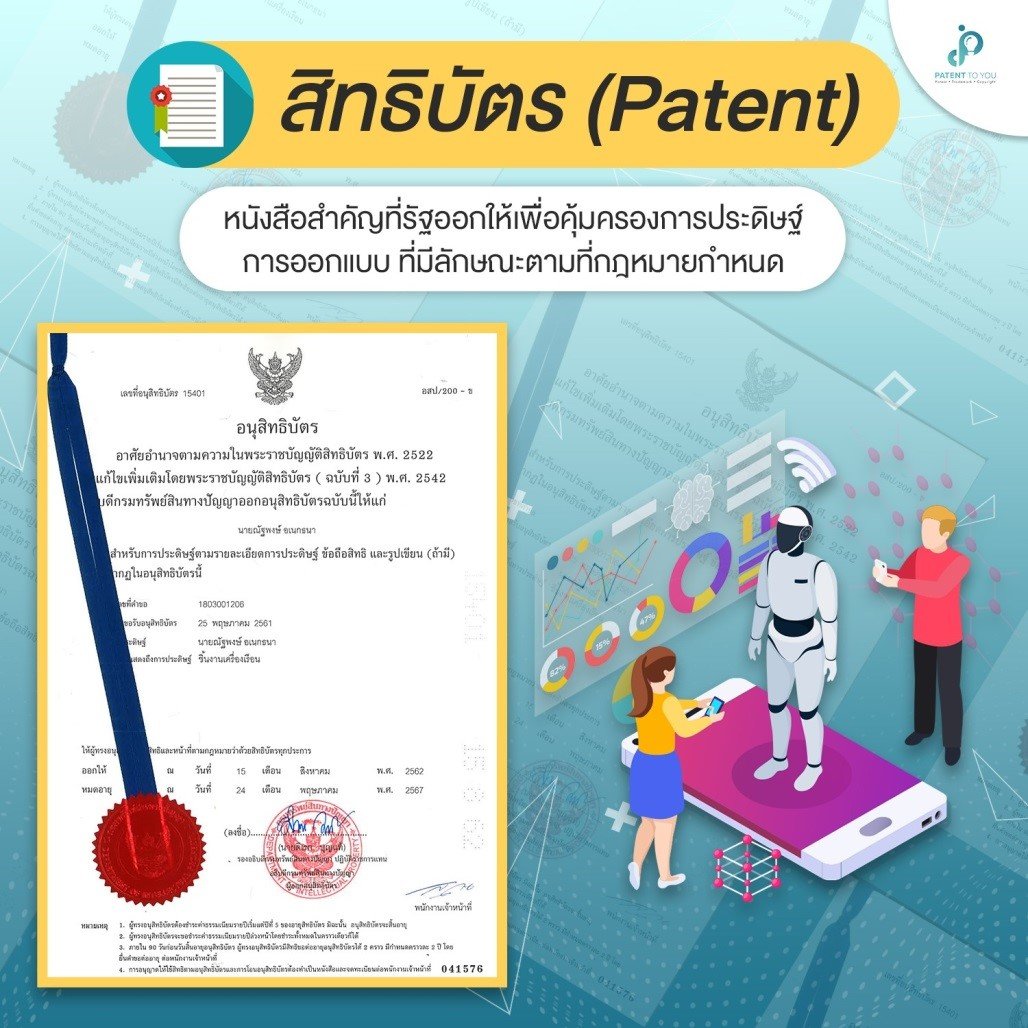
This is applying for an official certificate granted by the state to protect an invention that is new, involves an inventive step, and is capable of industrial application — for example, a new machine or manufacturing process. (Registration is required to receive protection.)
2. Petty Patent
Protects an invention the same way an invention patent does, but only requires novelty and industrial application — no inventive step. It suits incremental product improvements that don't rise to a full innovation. Examination is faster than an invention patent, but the protection term is shorter.
3. Design Patent
Protects a product's shape, external appearance, or pattern that is new and can serve as a product design — for example, a bottle shape, packaging pattern, or furniture form. It does not protect how the product functions or works internally. (Registration is required to receive protection.)
4. Trademark Registration
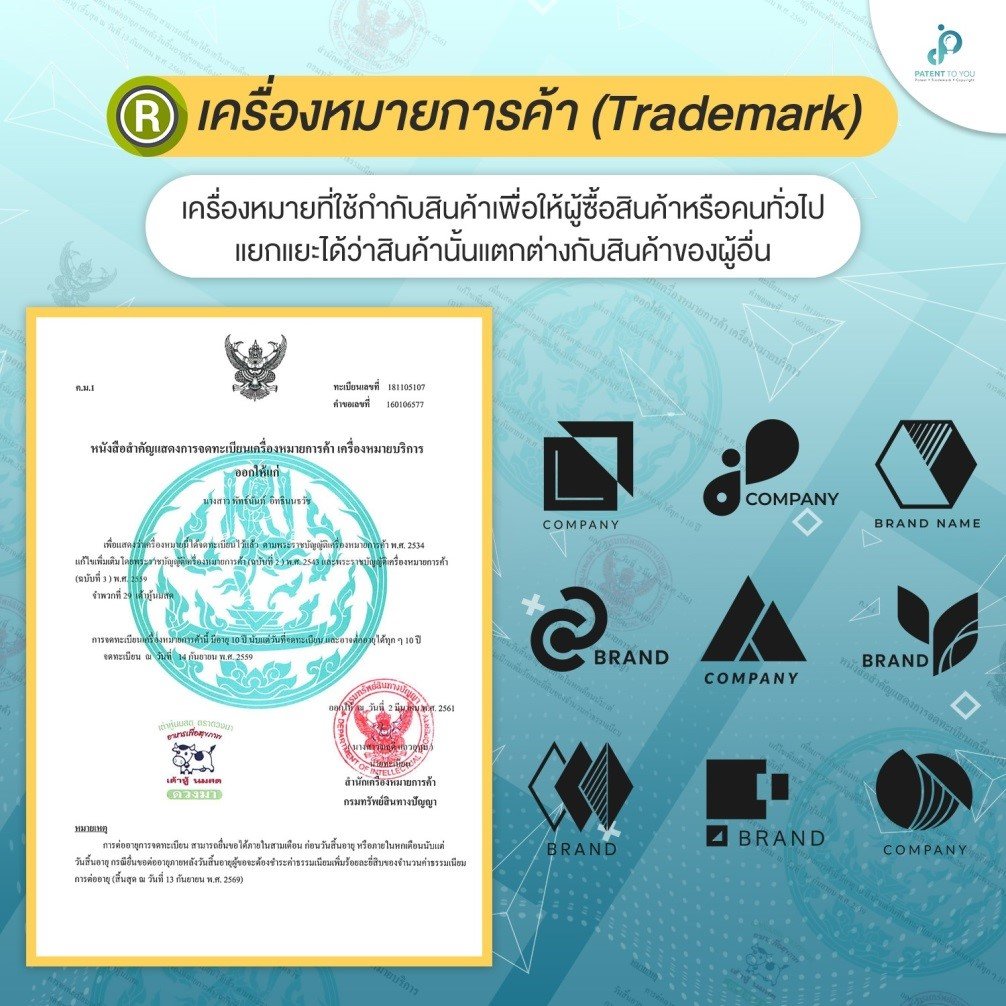
This is applying for an official certificate granted by the state to protect a mark used in connection with the goods or services listed in the application, to show that products using that mark are distinct from products using another party's trademark. (Registration is required to receive protection.)
5. Copyright
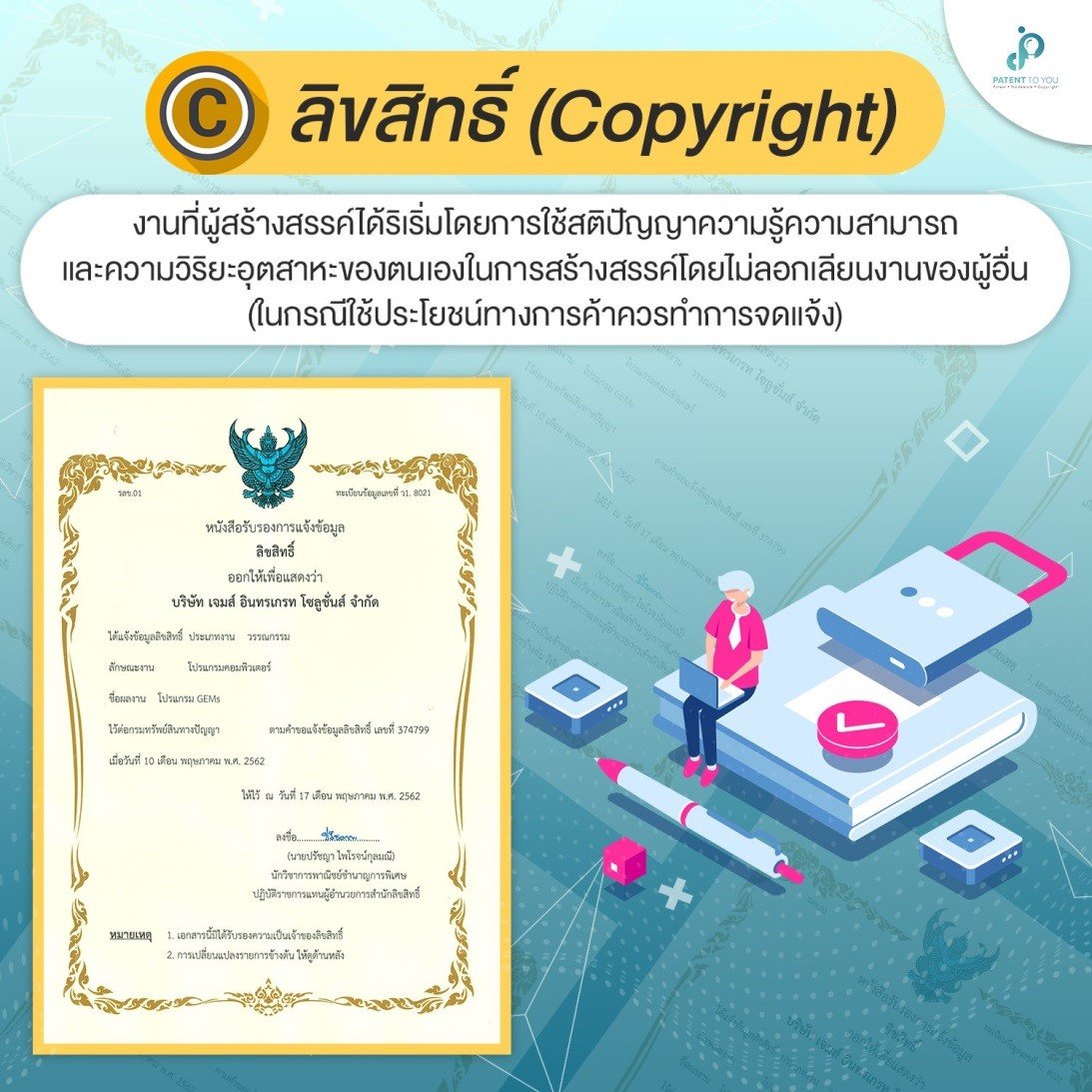
This is the exclusive right to do anything with a work that the creator originated using their own intellect, knowledge, ability, and effort in creating it, without copying someone else's work — provided the work created falls under a category protected by copyright law. The creator receives protection automatically the moment the work is created, with no registration required — for example, an illustration, a song, a film, or a book. (Copyright notification records information with the Department of Intellectual Property and may serve as supporting evidence, but it does not certify copyright ownership. Copyright generally arises automatically when a qualifying work is created.)
6. Trade Secret
Protects business information that has value because it's kept confidential — for example, a formula or manufacturing process. No registration is required, but the owner must take reasonable steps to keep it secret. Information may cease to qualify as a trade secret once it becomes generally known or readily accessible, though remedies relating to an earlier unlawful acquisition, use, or disclosure may still apply depending on the facts. See Patent vs. Trade Secret: Which Should You Choose? for more detail.
Now, let's take a look at whether the products or services you sell fall under any category of intellectual property — in practice, it's often more than one at the same time. If you're not sure, talk to our team to work out the right approach for your situation.