

What is copyright?
Copyright is the right a creator holds over a work made through their own intellect, knowledge, skill, and effort, without copying someone else's work — for example literary works, artistic works, musical works, films, and computer programs, as defined under the Copyright Act B.E. 2537 (1994).
Do you need to register before you have the right?
No. This is a key difference from patents and trademarks. Copyright arises automatically the moment a work is created — the creator does not need to file a registration first to hold the right to their work.
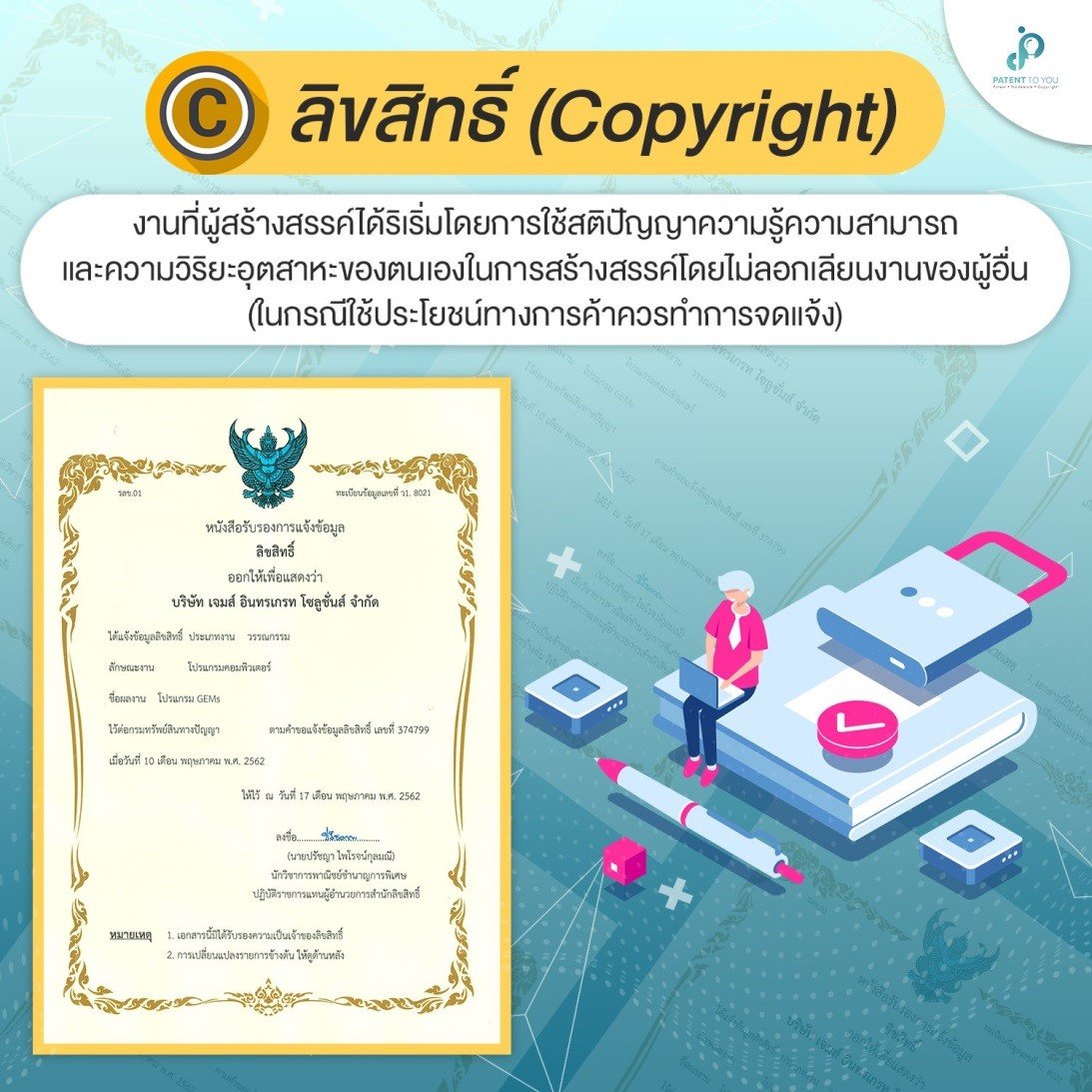
So why do people still file a "copyright notification"?
What the Department of Intellectual Property (DIP) offers is called "copyright data notification," not a registration process like patents or trademarks — and there is no substantive examination before the certificate is issued. Filing a notification is still useful, though: it creates evidence of the date and details of the work, which can be referenced later if an ownership dispute arises, especially for works that will be used commercially.
How long is it protected?
Copyright is generally protected for the life of the creator, plus another 50 years after their death. The term can vary by type of work — for example photographs or audiovisual works — so it's worth checking the specifics for your particular work.
If you're interested in filing a copyright notification, click the link to see the details.